Why Do Red-and-Blue 3D Glasses Work? Bringing the Science of Anaglyphs into STEM Learning with Merge 3D
The most exciting technologies in education are not always the most expensive. Sometimes they are the tools that remove barriers and make powerful experiences easier to access.
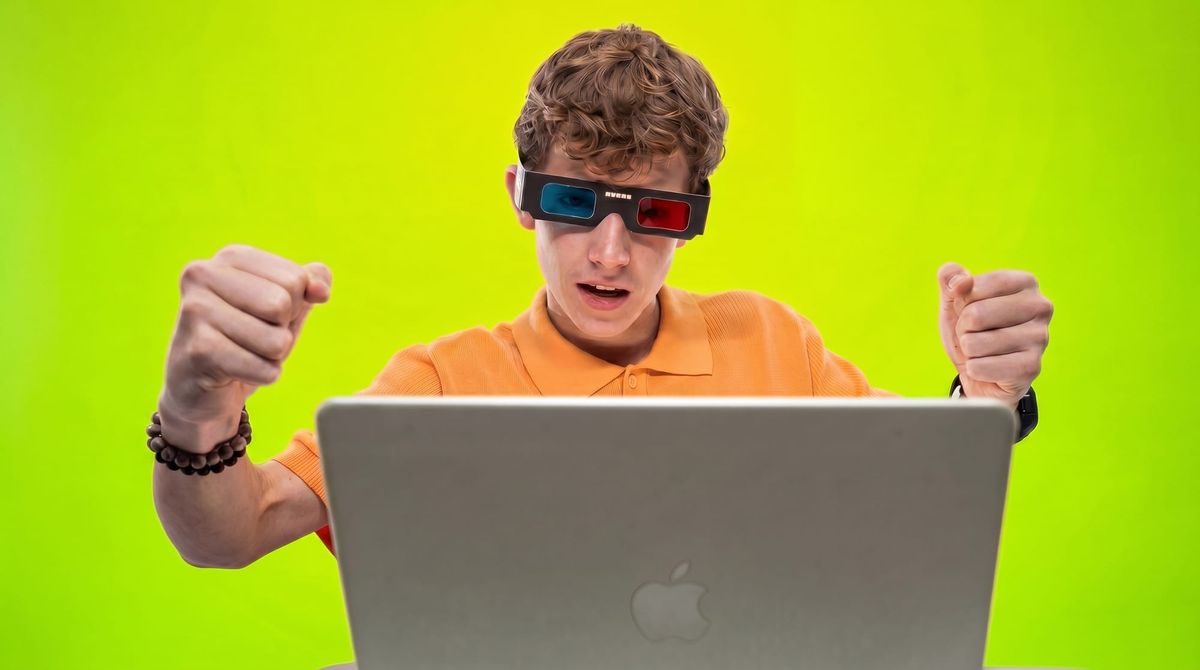
There is something instantly recognizable about a pair of red-and-blue glasses. For decades they have shown up in movie theaters, comic books, and science museums, often creating a sense of novelty and surprise. Put them on and suddenly flat images seem to jump off the page. It feels like a trick.
But it is not a trick at all. It’s science!
Understanding how anaglyph 3D works opens the door to lessons in physics, biology, engineering, visual perception, and technology design. Better yet, it gives students an opportunity to explore one of the most fascinating concepts in STEM: how our brains build reality from information.
Today, that same science is finding a new place in classrooms through the upcoming, all-new Merge 3D platform and Merge Anaglyph 3D mode.
 Merge EDU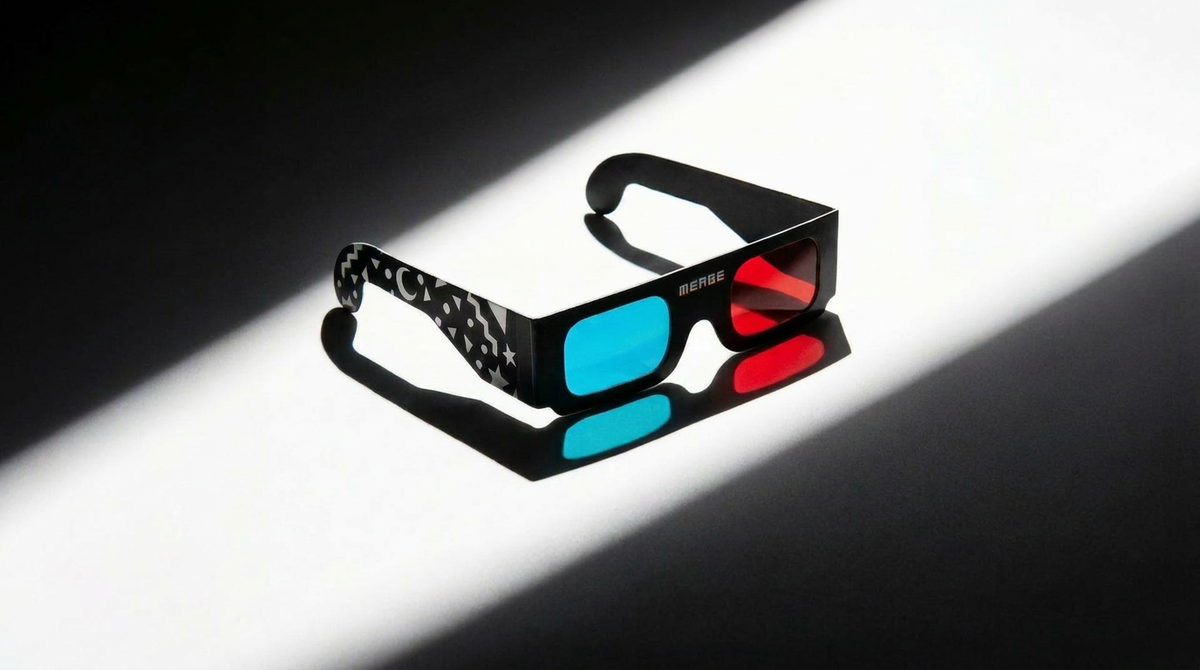
Your Brain Is Already a 3D Machine
Humans do not actually see the world in 3D directly. Instead, each eye sees a slightly different version of the world because our eyes sit a few inches apart. Your brain constantly combines these two images and calculates differences between them to determine depth and distance.
This process is called stereoscopic vision.
Without even thinking about it, your brain is measuring tiny visual differences every second:
- How far away is the desk?
- Which object is closer?
- How deep is that canyon?
- How large is that mountain?
Our brains solve incredibly complex geometry problems automatically.
Anaglyph images work because they take advantage of this natural system.
How Anaglyph 3D Glasses Create Depth
An anaglyph image combines two slightly different views of the same object into one picture. One image is tinted red, while the other is tinted cyan (blue-green).
Crucially, the 3D effect depends entirely on the digital image on the screen being encoded with these specific red and cyan color channels, shifted slightly apart to mimic the natural spacing of human eyes. The platform renders two offset perspectives of the object and blends them into a single asset. Without these exact color layers embedded directly within the digital image itself, the glasses would simply act as colored filters without creating any depth.
When students put on anaglyph glasses:
- The red lens filters out one image
- The blue lens filters out the other image
- Each eye receives a different perspective
- The brain combines them into a single 3D experience
Suddenly, depth appears.
Objects seem to float outward from the screen or extend deep into the background. Flat displays begin behaving like windows into three-dimensional space.
The amazing part is that no specialized screens are required.
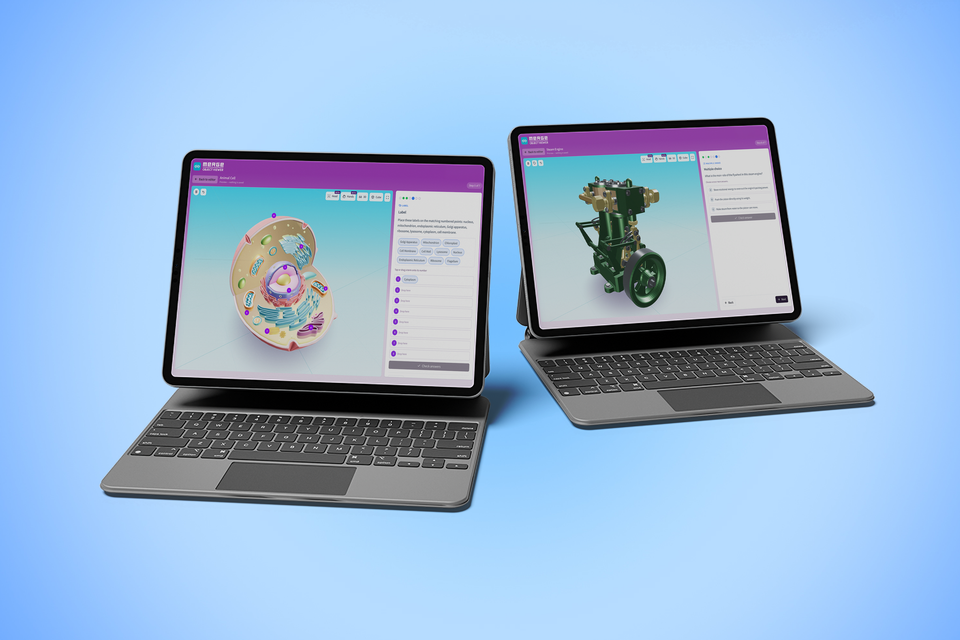
A standard laptop, tablet, Chromebook, or display can become a 3D viewing experience with nothing more than affordable paper glasses.
 Merge EDU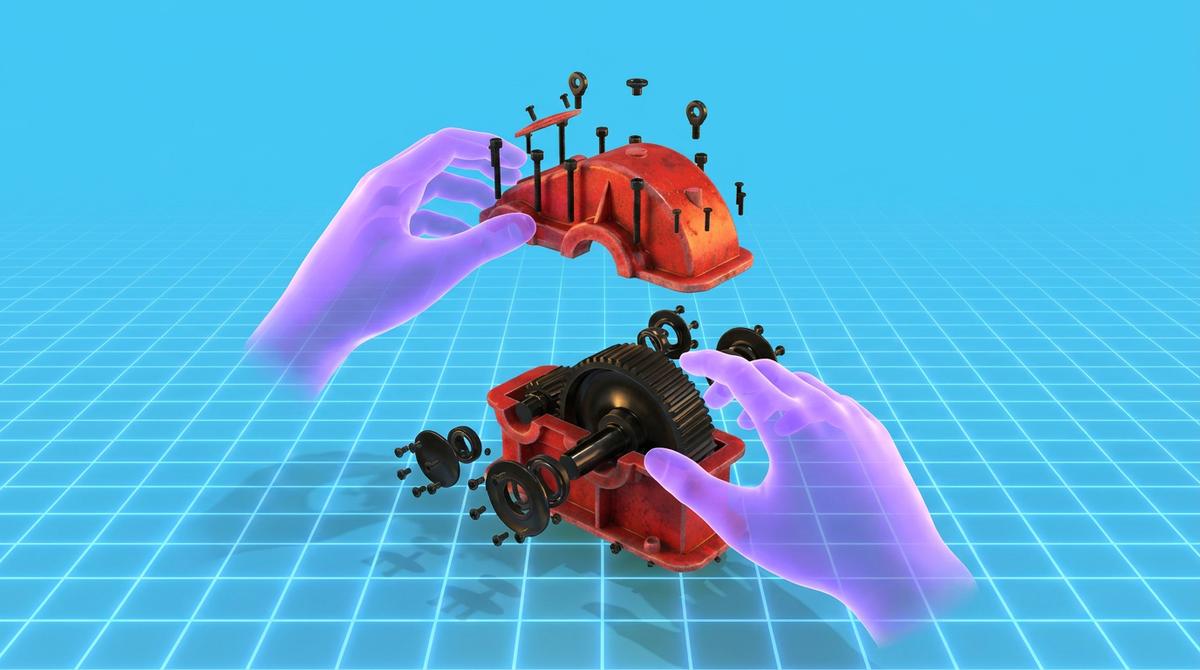
Why This Matters for STEM Learning
Many of the concepts students struggle with are difficult not because they are too advanced, but because they are difficult to visualize.
Students are often asked to mentally construct 3D ideas from 2D diagrams:
- A biology textbook may show a cell on a flat page.
- An Earth science lesson may show layers beneath the Earth’s surface.
- A chemistry diagram might represent molecular structures with circles and lines.
- An engineering sketch may ask students to imagine how pieces fit together in space.
For some learners, translating flat images into mental models comes naturally. For others, it creates a barrier between seeing information and understanding it.
Three-dimensional visualization helps bridge that gap.
Research in STEM education continues to show that spatial reasoning and visualization skills play a major role in learning science, technology, engineering, and mathematics concepts. Giving students the ability to inspect and manipulate objects in three dimensions can make abstract ideas feel more tangible and accessible.
Turning Any Classroom into a 3D Learning Space
This is where Merge EDU introduces a new layer of interaction.
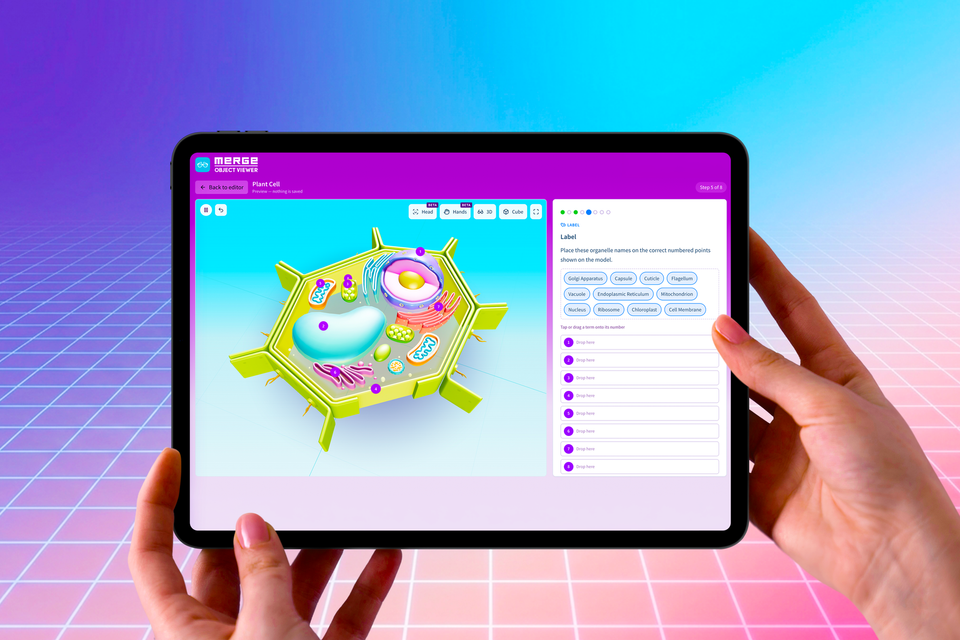
With Merge Anaglyph 3D Glasses and the new Merge 3D platform, students can transform ordinary screens into immersive 3D viewing experiences.
Instead of simply looking at content, students can experience depth and volume in a way that feels natural and intuitive.
Students can explore:
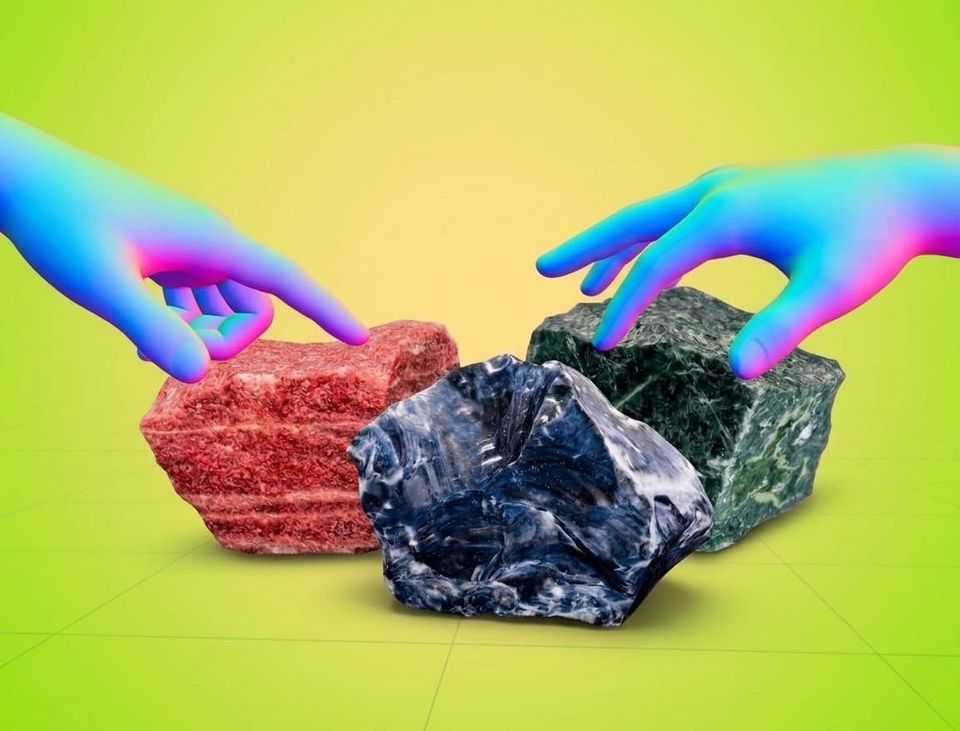
- The layers beneath Earth’s surface
- Human anatomy and biological structures
- Historical artifacts and fossils
- Engineering and design models
- Student-created 3D objects
- STEM concepts from Merge’s growing library of content
Because students and teachers can also upload or create their own models, the possibilities extend far beyond pre-made content.
Imagine students designing structures in a makerspace, creating a model in a 3D design program, and then instantly seeing their creation appear in stereoscopic 3D before ever sending it to a printer.
Or imagine history students examining artifacts with realistic depth and scale.
Or biology students investigating structures that previously existed only as diagrams on a page.
The result is a learning experience that feels more physical and interactive, while remaining accessible and easy to implement.
 Merge EDU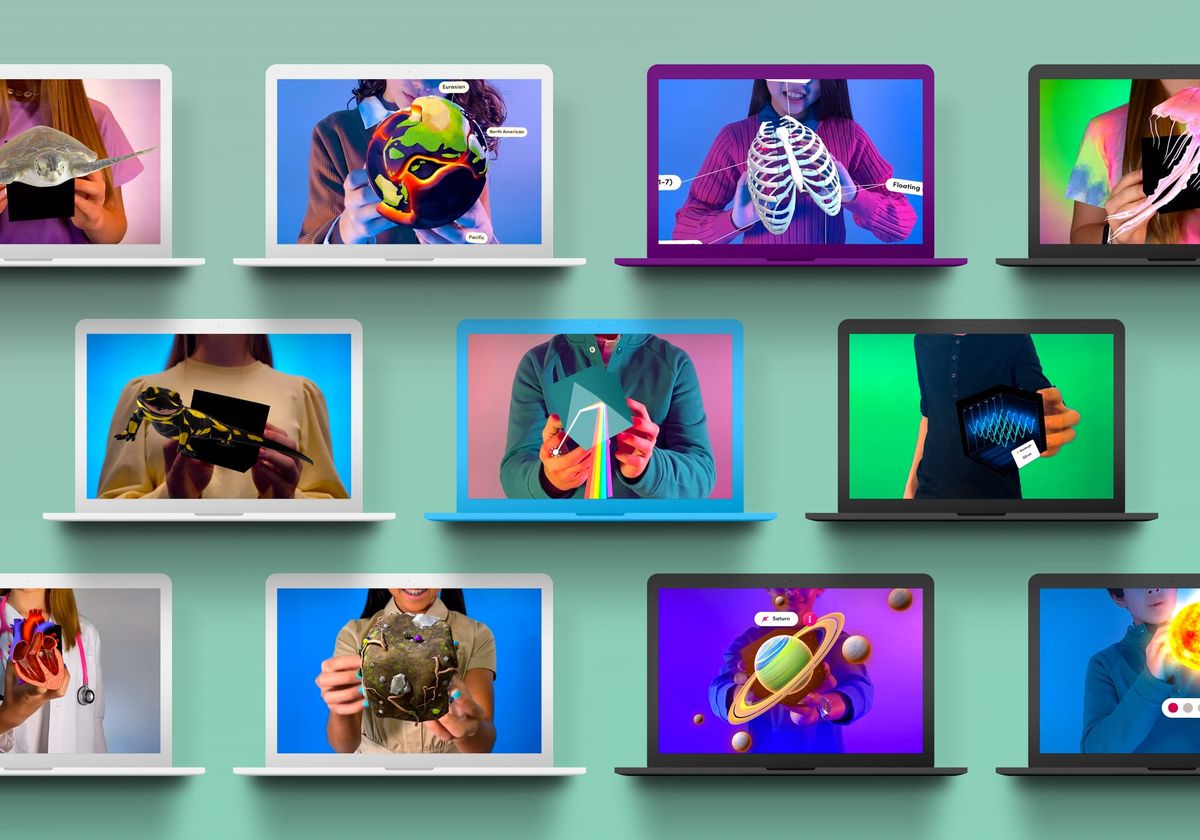
A Small Pair of Glasses with Big Possibilities
The most exciting technologies in education are not always the most expensive. Sometimes they are the tools that remove barriers and make powerful experiences easier to access.
Merge Anaglyph 3D mode offers a low-cost, high-impact way to bring another dimension of interaction into the classroom.
Students are not just seeing science.
They are seeing how science works.
They are learning about optics, perception, human biology, engineering design, and spatial reasoning all at once, while experiencing the same principles firsthand.
And perhaps most importantly, they are discovering that the world around them can look very different when viewed from another perspective.
Ready to see learning differently? Stay tuned as we continue sharing updates about the all-new Merge 3D Platform, and explore new ways to bring augmented reality, AI creation, and 3D experiences into every classroom.