Hands-On Space Exploration: How Augmented Reality Is Transforming Problem-Solving in STEM
The findings of Taufiq et al. fit into a growing body of research demonstrating that tactile augmented reality is one of the most effective bridges between abstract scientific principles and concrete understanding.
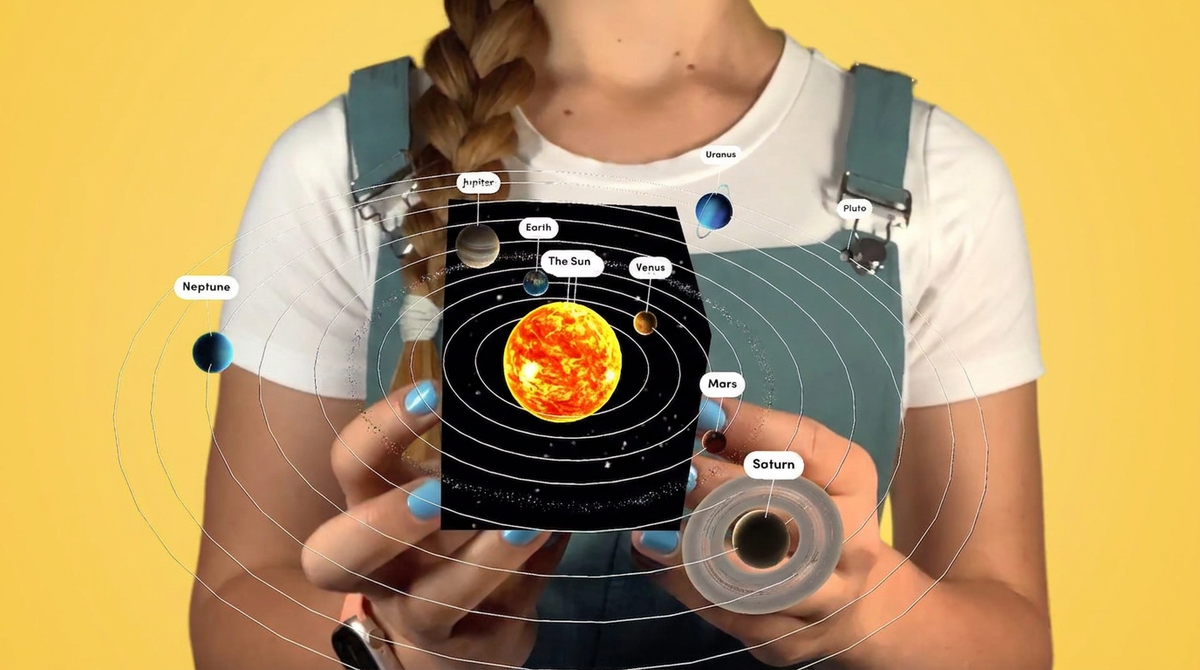
Learning about astronomy frequently means studying static 2D textbook diagrams, memorizing orbital order, or looking at wall posters. While these materials provided facts, they often failed to help students develop spatial intuition or conceptualize complex, dynamic systems like our solar system.
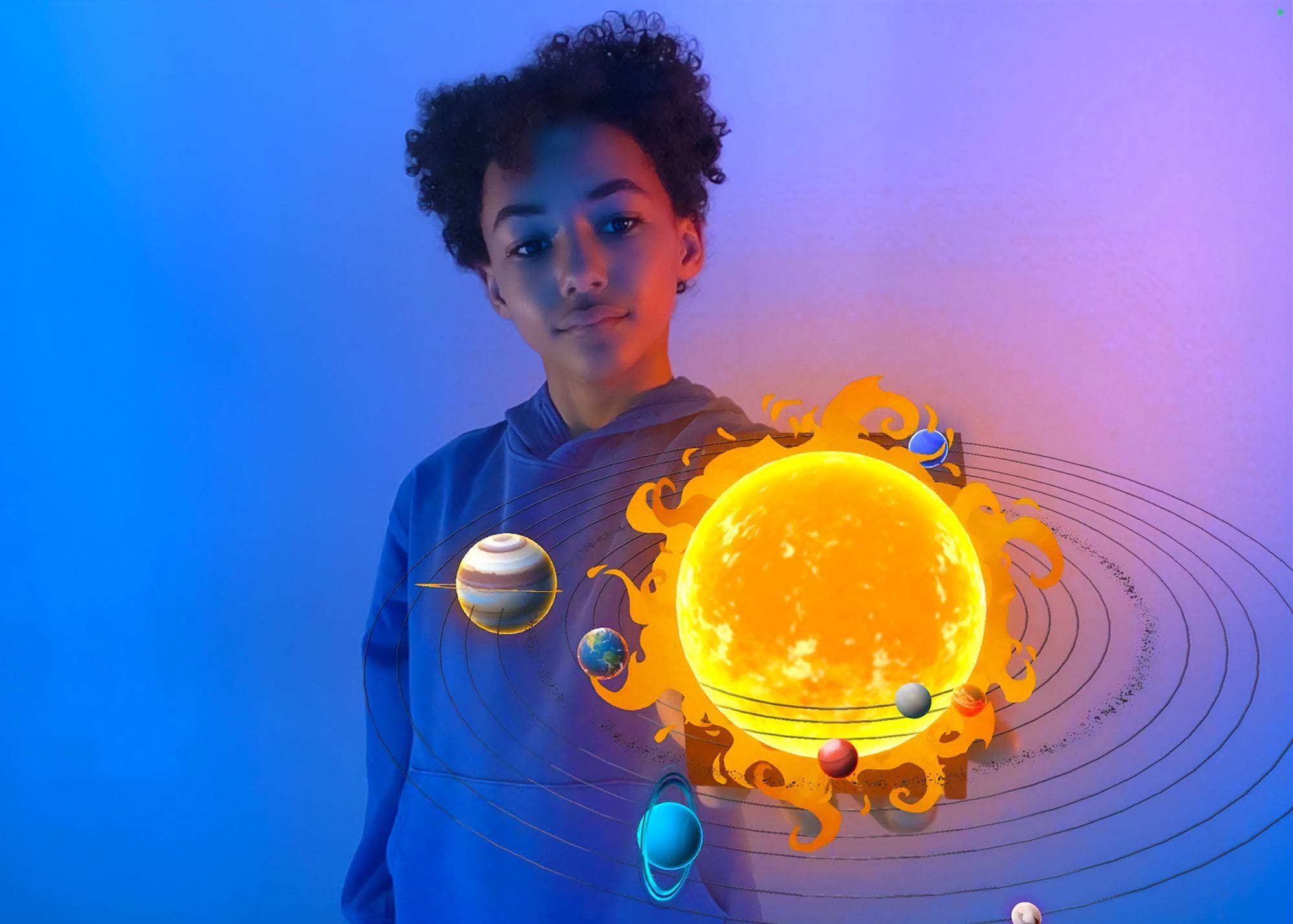
Enter the Merge Cube—a physical, handheld foam cube that transforms into interactive, 3D holographic models when viewed through a smartphone or tablet screen.
Recent educational research shows that this low-cost AR device does much more than capture student attention: it changes how students process information and solve problems in STEM.
The Research: Bridging Abstract Concepts and Problem-Solving
A study by Taufiq et al. (2021) titled “Feasibility study of a solar system learning media based on Merge Cube augmented reality to embedding problem solving skills” examined how Merge Cube technology impacts middle school science education.
Rather than treating AR as a novelty gimmick, Taufiq and the research team evaluated an AR module—utilizing Merge simulations like Galactic Explorer—designed specifically to cultivate 21st-century problem-solving capabilities.
Key Findings from the Study
- High Feasibility & Expert Endorsement: Across rigorous validation metrics, subject-matter experts rated the Merge Cube solar system module at 82% for content accuracy, media experts rated it at 86% for usability and design, and practicing classroom teachers rated it at 82% for pedagogical efficacy.
- Active Inquiry Over Passive Consumption: Traditional astronomy lessons present pre-packaged answers. In contrast, holding a 3D solar system in your palm allows students to rotate planets, inspect axial tilts, and directly observe gravitational relationships. This encourages students to formulate hypotheses, test spatial models, and reach conclusions through guided discovery.
- Lowering Spatial Barriers: Abstract physical systems (e.g., retrograde motion, planetary scale, or planetary rotation) present major cognitive hurdles. The tactile sensation of physical manipulation paired with visual 3D feedback gives students an intuitive anchor, allowing them to focus their mental energy on high-level analysis and inquiry.
"Integrating augmented reality via the Merge Cube transitions students from passive receivers of abstract spatial data to active investigators capable of visual problem-solving." — Taufiq et al. (2021)
How It Works in the Classroom
When students use the Merge Cube in an astronomy context, learning shifts from memorization to active inquiry:
- Manipulative Interaction: Students physically tilt and rotate the cube, examining planetary structures and surface topographies from any angle.
- Dynamic Observation: Instead of looking at a frozen graphic, learners observe planetary rotation speeds and orbital dynamics relative to one another in real time.
- Collaborative Problem-Solving: Because the AR experience can be shared on screens or cast to smartboards, students work in small teams to tackle prompt-based challenges (e.g., "Based on axial tilt and distance from the sun, why do seasons differ between Earth and Mars?").
The Broader Impact on STEM Education
The findings of Taufiq et al. fit into a growing body of research demonstrating that tactile augmented reality is one of the most effective bridges between abstract scientific principles and concrete understanding. By combining physical manipulation with digital visualization, the Merge Cube helps build a foundation for critical thinking that extends far beyond astronomy.
 Merge EDU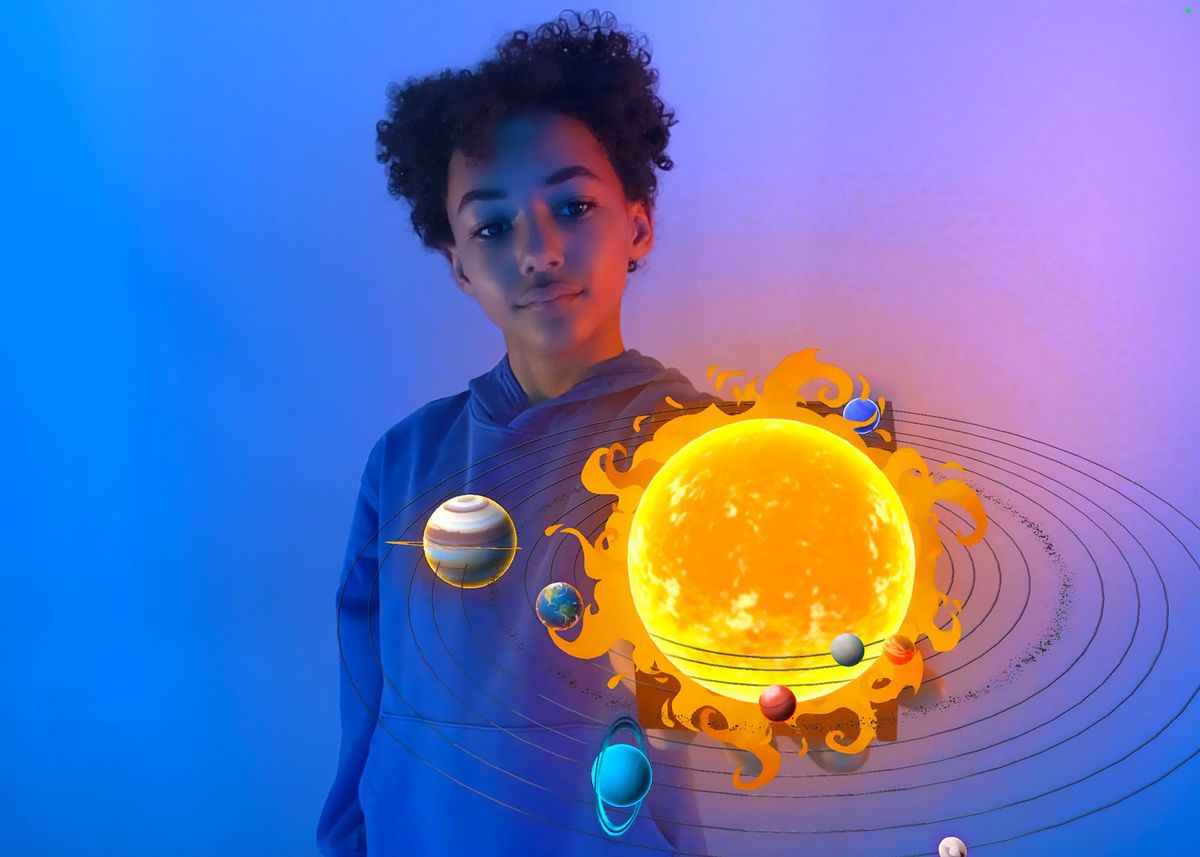
As schools look for scalable, accessible, and high-impact digital tools, research-backed applications of the Merge Cube demonstrate that the future of STEM education isn't just about reading information—it's about holding it in your hands and figuring out how it works.
Reference
- Taufiq, M., Nuswowati, M., & Widiyatmoko, A. (2021). Feasibility study of a solar system learning media based on merge cube augmented reality to embedding problem solving skills. Journal of Physics: Conference Series, 1918(5), 052064. https://doi.org/10.1088/1742-6596/1918/5/052064