World Heart Day: Bring Cardiovascular Anatomy to Life with 3D & Augmented Reality
This World Heart Day, give your students an "aha!" moment! Help them transition from memorizing textbook definitions to truly understanding cardiovascular health, anatomy, and physiology.

Every year on September 29, educators around the globe celebrate World Heart Day. It is a dedicated moment to highlight cardiology, circulatory health, and preventive medicine—topics that are foundational to K–12 biology, human anatomy, and health sciences.
However, ask any science teacher, and they will tell you the same thing: teaching the human heart from a flat 2D textbook is tough.
Tracing blood flow through four chambers, understanding valve mechanics, and visualizing spatial depth on a piece of paper often leads to cognitive overload rather than genuine comprehension.
This World Heart Day, you can transform abstract anatomy into a memorable, hands-on experience using the Heart Cross Section anatomy model in Merge Object Viewer.
Why 2D Heart Diagrams Fall Short
The human heart is an intricate, dynamic 3D pump. When students look at a static diagram:
- Spatial depth is lost: It’s difficult to perceive how the atrium sits relative to the ventricle or how the aorta arches over the pulmonary artery.
- Flow is abstract: Arrows on a page try to show double circulation, but students struggle to internalize the pathway of oxygenated versus deoxygenated blood.
- Engagement dips: Static images fail to spark the curiosity that drives deep scientific inquiry.
Hold, Inspect, and Explore: The Heart in Merge Object Viewer
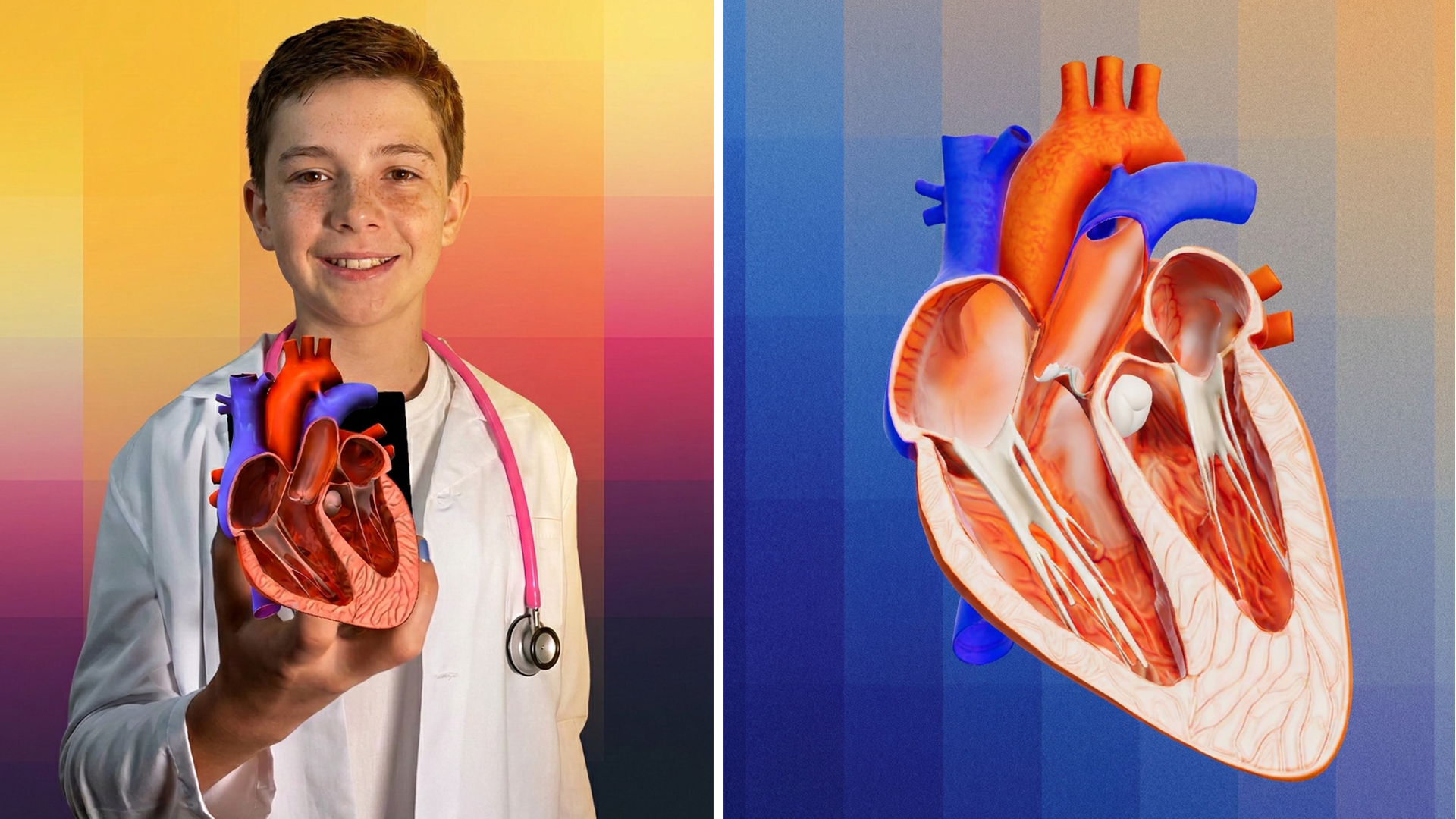
With the Merge 3D, students don't just look at a diagram of the heart—they hold it, rotate it, inspect its internal structures, and watch it pulse right on their desks.
Using the Merge Object Viewer web app, teachers can launch a high-fidelity, interactive 3D model of a human heart cross section instantly in any web browser.
Key Features to Explore in Class:
- Cross-Sectional Views: Peer inside the heart to examine the left and right atria, ventricles, mitral valve, and tricuspid valve.
- Interactive Labels: Click on labels of the anatomical structures to uncover detailed explanations of structural functions.
- Multiple Modes of Interaction:
- 3D Mode: Click, drag, and zoom directly on any screen—perfect for Chromebooks, tablets, or laptops.
- Cube Mode: Hold the heart in the palm of your hand using the physical Merge Cube (or printable paper cube) for a tactile, embodied learning experience.
- Hand & Head Tracking: Manipulate and inspect the heart mid-air using simple camera gestures.
2 Quick World Heart Day Lessons for Your Classroom
Here are two ways you can integrate the Merge Object Viewer Heart Cross Section Model into your lesson plans:
1. Trace the Blood Flow (Circulatory Path)
Have students open the Heart Cross Section Model on their devices. Ask them to act as a single red blood cell traveling through the circulatory system.
- The Task: Using information on the text labels, students map out their journey starting at the Vena Cava Right Atrium Right Ventricle Pulmonary Artery to the lungs, returning through the Pulmonary Veins Left Atrium Left Ventricle Aorta.
- Assessment: Students record a short audio explanation directly on their device detailing where blood picks up oxygen and where it delivers it to body tissues.
2. Connect Anatomy to Preventive Medicine
World Heart Day heavily focuses on preventive medicine and circulatory health.
- The Task: After inspecting healthy heart structures in 3D, challenge students to research common cardiovascular conditions (such as coronary artery disease, high blood pressure, or valve disorders).
- Discussion: How do lifestyle choices—like physical activity, nutrition, and stress management—impact muscle efficiency and vascular health?
Built for the Everyday Classroom
You don't need expensive VR headsets or dedicated lab carts to bring 3D learning to your students. Merge 3D is:
- Web-Based & App-Free: Access everything directly in your browser at www.dashboard.merge 3d.ai.
- Device Flexible: Runs smoothly on standard school Chromebooks, iPads, tablets, and laptops over everyday school Wi-Fi.
- Zero Setup Time: Teachers can launch a heart anatomy session in less than 60 seconds during standard class periods.
Bring 3D Cardiology into Your Classroom Today
This World Heart Day, give your students an "aha!" moment! Help them transition from memorizing textbook definitions to truly understanding cardiovascular health, anatomy, and physiology.