Fueling Immersive Learning: Top Funding Opportunities for Educators
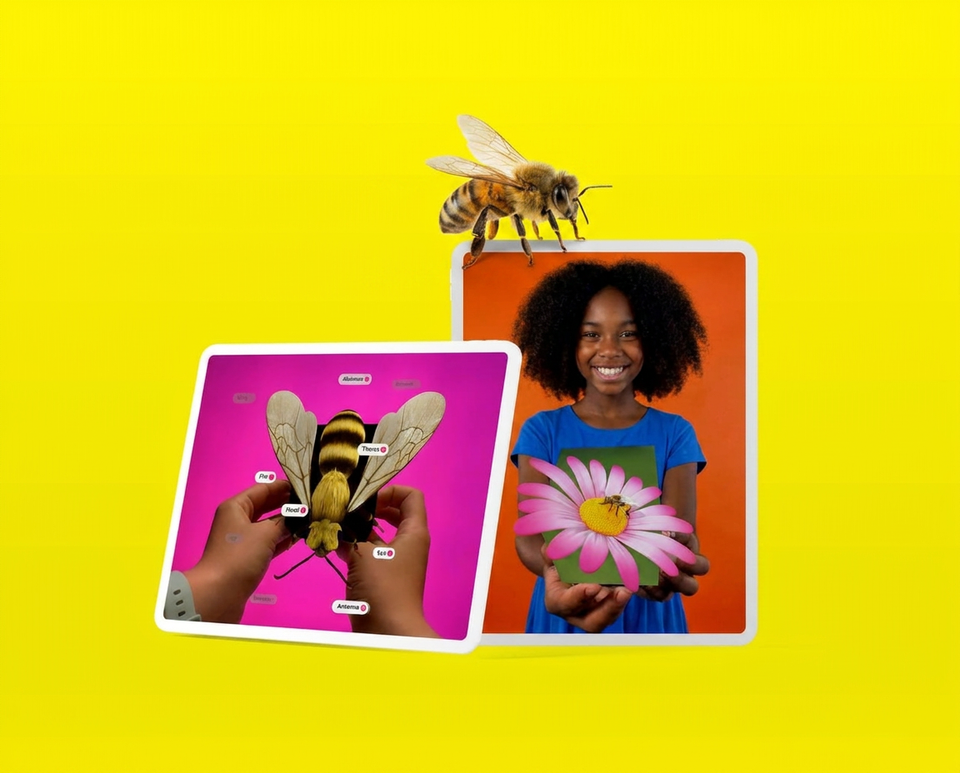
Across the country, educators are using innovative tools to captivate students in STEM, foster creativity, and build workforce-ready skills.

If you’re looking to integrate augmented reality into your classroom, school, or district, exploring grants and charitable programs is a powerful way to secure the funding you need. Below is a comprehensive list of funders—ranging from large foundations to local corporate giving programs—that can help bring Merge EDU to your learners.
Why Funding Emerging Tech Tools Matters
- Engagement & Equity: AR experiences can make STEM concepts come to life for students, spark curiosity, and broaden access to high-quality instruction—especially for students in underserved communities.
- 21st Century Skills: AR technology with Merge EDU helps students develop 21st century competencies such as problem-solving, collaboration, and digital literacy. Many corporate donors seek to strengthen the future workforce by investing in these experiences.
- Alignment with Funding Priorities: STEM readiness, workforce development, and diversity in tech are recurring themes. Educators who demonstrate how Merge EDU addresses these priorities often find a strong match with funders.
1. Major National Foundations
These organizations award significant grants on a nationwide basis, typically focusing on K–12 STEM education, early learning, and large-scale district or nonprofit projects.
Akamai Foundation
- Deadline: March 27th
- Amount: $25K+
- Locations: Nationwide
- Focus: STEM education (K–12), math excellence, diversity in tech
- Website: Akamai Foundation
- How to Apply: Application usually reopens at the beginning of each year
- Notes: Prioritizes underserved populations
Brown Advisory Charitable Foundation
- Deadline: Rolling
- Amount: $2K–$50K
- Locations: Nationwide (heavy emphasis in Maryland)
- Focus: Education nonprofits of all kinds
- How to Apply: Mail application with project details to Catherine P. McDonnell at 901 S Bond St, Suite 400, Baltimore, MD 21231
- Notes: Program-specific funding only
Change Happens Foundation
- Deadline: Rolling
- Amount: Up to $20K
- Locations: Nationwide
- Focus: Innovation in science, environment, and education
- Website: Change Happens Foundation
- How to Apply: Submit LOI at this link
- Notes: Prioritizes “high-level impact” programs that do things differently
Comis Foundation
- Deadline: 2Q (April/May) and 4Q (Oct/Nov)
- Amount: $25,000 – $75,000
- Locations: Nationwide
- Focus: Opportunity and access for children (grades K–12)
- Website: Comis Foundation
- How to Apply: LOI first; if invited, submit full proposal
- Notes: Offers pilot, proof-of-concept, and capacity-building grants
Gates Foundation – K–12 Education Fund
- Deadline: Specific to RFPs (none open currently)
- Amount: $60K+
- Locations: Nationwide
- Focus: Large-scale math instruction and student outcome improvements in K–12
- Website: Gates Foundation K–12
- How to Apply: Subscribe for RFP notifications; highly competitive
- Notes: Prefers programs that can scale as a national model
Gordon & Betty Moore Foundation – Science Learning
- Deadline: Check in for new grant opportunities
- Amount: $10K–$50K
- Locations: Nationwide
- Focus: Lifelong science engagement and innovative science-rich experiences
- Website: Moore Foundation
- How to Apply: Typically a brief email inquiry or LOI once solicitations open
- Notes: Has previously funded AR/VR programs
Lemelson Foundation
- Deadline: Rolling
- Amount: $10K–$100K
- Locations: Nationwide (preference for West Coast)
- Focus: Invention education (K–12 STEM) and entrepreneurship ecosystems
- Website: The Lemelson Foundation
- How to Apply: Read their Funding Page to learn more
- Notes: Great fit if you can integrate invention & entrepreneurship
Motorola Solutions Foundation
- Deadline: Annually in April
- Amount: Up to $50K
- Locations: Primarily MD, TX, CA, MA, UT, IL, FL, CO
- Focus: Hands-on STEM, coding, cybersecurity, robotics for ages 8–18; teacher training
- Website: Motorola Solutions Foundation
- How to Apply: Check site in late 2026 for next cycle
National Science Foundation (NSF)
Supports research and development to advance STEM teaching and learning in K-12 formal and informal settings, leveraging AI and emerging technologies to build knowledge, create tools and strengthen the U.S. STEM education and workforce.
NSF STEM K-12 (Solicitation 25-545)
- This is now the primary "umbrella" program for most K-12 STEM research and development. It replaces several older programs to provide a more flexible, multi-disciplinary approach to improving STEM teaching and learning.
- Focus: Supports fundamental, applied, and translational research in both formal (classroom) and informal (museums, after-school) settings. It emphasizes the use of emerging technologies like Artificial Intelligence (AI) and quantum science in the classroom.
- Deadline: Proposals Accepted Anytime. Unlike many other grants, this solicitation is "always-on," allowing teams to submit when their project is ready.
- Award Range: Research/Development: $350,000 to $750,000 (2–3 years).
- Best For: K-12 school districts partnering with universities to test new curricula, instructional models, or AI-integrated learning tools.
- Website: https://www.nsf.gov/funding/opportunities/stem-k-12-nsf-stem-k-12
2. Innovative Technology Experiences for Students and Teachers (ITEST)
- ITEST focuses specifically on the STEM workforce of the future. It seeks to spark interest in STEM careers among PreK-12 students, particularly those from underserved or underrepresented backgrounds.
- Focus: Research and development of "innovative technology experiences" that motivate students to pursue STEM careers. This includes hands-on projects, industry partnerships, and technology-rich learning environments.
- Deadline: Typically mid-August annually (expected August 2026).
- Award Range: Varies by project type, ranging from $500,000 for small-scale theory projects to $3,500,000 for large-scale "Scale-up" innovations.
- Best For: Programs that bridge the gap between classroom learning and real-world industry skills (e.g., cybersecurity, green energy, or data science modules).
- Website: https://www.nsf.gov/funding/opportunities/stem-k-12-nsf-stem-k-12
New York Life Foundation – Aim High Grant Program
- Deadline: Typically Feb 1
- Amount: $15K, $50K, $100K
- Locations: Nationwide
- Focus: Middle school OST programs in literacy, STEM, afterschool, career readiness
- Website: Afterschool Alliance
- How to Apply: RFP reopens end of year
William Randolph Hearst Foundation
- Deadline: Rolling
- Amount: Minimum $100K
- Locations: Nationwide
- Focus: Education (K–12 and higher ed), especially preparing a future workforce
- Website: Hearst Foundations
- How to Apply: Online Application
- Notes: Best suited for large-scale programs or multi-partner proposals
2. Corporate Giving & Private Foundations
Corporate foundations often want to strengthen the communities where they operate, especially in STEM/workforce development.
American Electric Power (AEP) Foundation
- Deadline: Rolling
- Amount: $2K–$200K
- Locations: Must be in AEP territory or have a broad national/regional scope
- Focus: Early childhood through higher-ed STEM programs
- Website: AEP Giving Back
- How to Apply: Must secure invitation from local AEP Operating Company
Avnet Inc. – Avnet Cares Grants
- Deadline: Quarterly (Mar 10, Jun 10, Sep 10, Dec 10)
- Amount: $1K–$25K
- Locations: Multiple US sites (AZ, CA, OH, TX, etc.)
- Focus: STEM, diversity, environment, community crises
- Website: Avnet Community Engagement
- How to Apply: Online Application
Broadway National Bank
- Deadline: Rolling
- Locations: Texas
- Focus: Education, mentorship programs, scholarships
- Website: Broadway Bank Community Investment
- How to Apply: Online Donation Request
CenterPoint Energy Foundation
- Deadline: Feb 16 / July 26
- Amount: $10K–$150K
- Locations: IN, LA, MN, MS, OH, TX (specific counties listed in guidelines)
- Focus: STEM for under-resourced areas, digital device access
- Website: Application Process
Halliburton Foundation
- Deadline: Rolling
- Amount: $5K–$35K
- Locations: Nationwide (emphasis on TX)
- Focus: K–12 & higher ed STEM, focusing on advanced skills for oil/gas industry
- Website: Halliburton Foundation Guidelines
- How to Apply: Online Application
International Paper Company Foundation
- Deadline: September
- Amount: $3K–$25K
- Locations: Near IP facilities; see IP Locations
- Focus: Education, hunger, health, disaster relief
- Website: IP Giving Eligibility
Jacobs Engineering Group
- Deadline: Rolling
- Focus: STEAM & sustainability, employee engagement
- Locations: Nationwide (see Jacobs Locations)
- Website: Jacobs STEAM
- How to Apply: Contact via their STEAM form
JetBlue Foundation
- Deadline: March 27
- Amount: $50K+
- Locations: NY, FL, TX, CA
- Focus: Aviation education and engineering
- Website: JetBlue Foundation
KLA-Tencor Foundation – Education Equity Fund
- Deadline: LOI Apr 1–30; if invited, full proposal by July 5
- Amount: $50K–$750K
- Locations: TX, AZ, and others near KLA sites
- Focus: Reducing barriers to STEM for underrepresented K–12 students
- Website: KLA Foundation
Labcorp Charitable Foundation
- Deadline: Rolling
- Amount: $1K–$25K
- Locations: Nationwide
- Focus: STEM & health-related programs
- How to Apply: Apply online
Verizon Foundation
- Deadline: Rolling
- Amount: $1K–$250K
- Locations: Nationwide
- Focus: K–12 STEM, summer/afterschool, teacher training, technology integration
- Website: Verizon Grants
- How to Apply: Contact local Verizon Community Relations Manager
3. Government Grants
These are typically large-scale, competitive grants geared toward multi-partner consortia, district-wide programs, or higher-ed collaborations.
US Department of Defense – Army
- Opportunity: NDEP STEM Open NFO
- Deadline: Rolling
- Amount: $100K–$10M
- Focus: Innovative STEM outreach & workforce initiative programs
- Website: Army NDEP STEM on grants.gov
4. Regional & Local Foundations
These funders focus on specific states, cities, or counties. Often, there’s less competition and a higher chance of success if your proposed program meets local community needs.
Community Foundation of Texas
- Deadline: Varies by fund
- Location: Texas
- Focus: 21st-century teaching & learning, cradle-to-career pipeline
- Website: CFT Education
The Brown Foundation, Inc.
- Deadline: Rolling
- Amount: $5K–$100K
- Location: TX (especially Houston)
- Focus: Broad grantmaking in education and the arts
- Website: Brown Foundation Guidelines
- How to Apply: Start with a pre-application online
The George Foundation
- Deadline: Rolling
- Amount: $10K–$230K
- Location: Fort Bend County, TX
- Focus: Career Readiness, Early Childhood Ed, K–12 Public Ed
- Website: The George Foundation
- How to Apply: Online Application
Shelton Family Foundation
- Deadline: Feb & August
- Amount: $1K–$50K
- Location: Abilene, TX & Big Country area
- Focus: Education, K–12, community colleges, human services
- Website: Shelton Family Foundation
- How to Apply: Online through CF Abilene
Tips for Writing Winning Grant Proposals
- Align to Funder Priorities Emphasize how Merge EDU’s AR/VR experiences address STEM, workforce readiness, or equity goals.
- Show Impact & Measurable Outcomes Include data-driven metrics for student achievement, engagement, and teacher satisfaction.
- Highlight Underserved Populations Many grants prioritize projects that serve low-income, rural, or underrepresented students.
- Build Local Partnerships In corporate grants, propose ways to involve the company’s employees, such as volunteer mentoring, project coaching, or field trips.
- Plan Ahead Large grants (NSF, DOD, major foundations) often require months of prep for letters of support and budget details.
- Tell a Story A compelling narrative about a student’s or teacher’s transformation with AR/VR can set your proposal apart.
Bringing Innovation to the Classroom
AR/VR can elevate science and engineering to new levels—allowing students to visualize cells in 3D, walk through historical landmarks, or build virtual prototypes. As you explore these funders, remember that a well-crafted proposal showing alignment with their objectives (equity, workforce, STEM excellence) and a measurable plan for impact will give you the best chance of success.
Have questions about using Merge EDU in your grant application? Our team is here to help! Connect with us at Merge EDU for guidance on how immersive technologies can strengthen your proposal and engage your learners like never before.