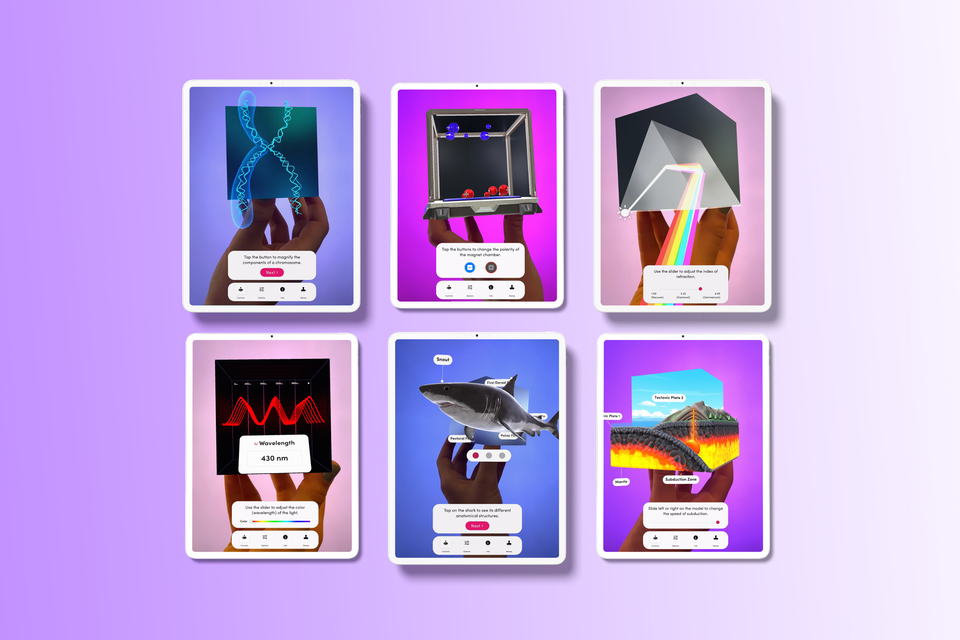
Exploring Space Systems with Merge Explorer
Merge Explorer makes it easier for students to ask big questions, think in systems, and build mental models that stick long after the lesson ends.
When students learn about space, it’s easy for our solar system to feel like the entire universe. The Sun at the center, planets orbiting neatly around it—end of story.
But space is far bigger, more dynamic, and far more interconnected than a single diagram can show. The Beyond Our Solar System activity in Merge Explorer helps students zoom out, connecting what they know about our solar system to the vast cosmic neighborhood it belongs to.
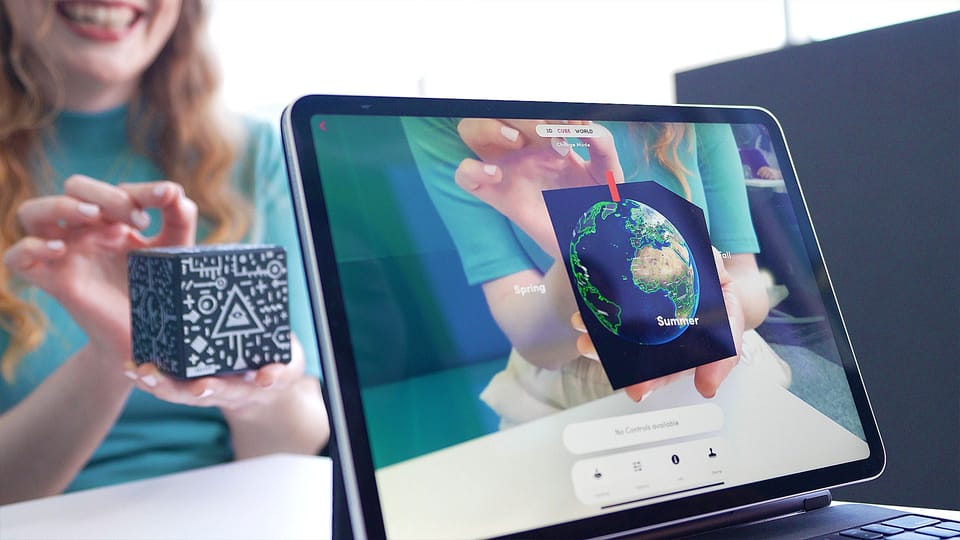
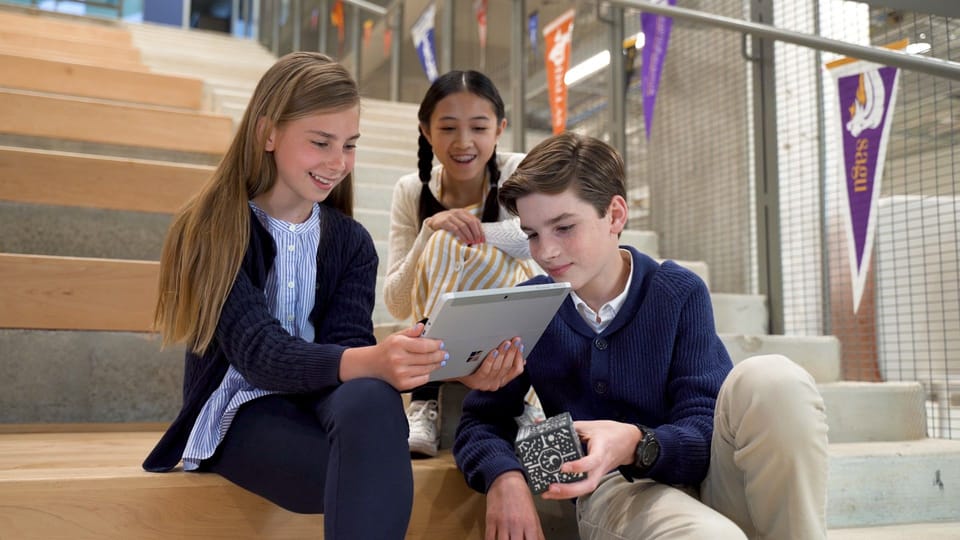
Using a Merge Cube, students don’t just observe space systems—they hold them, manipulate them, and watch them evolve over time. This hands-on experience turns abstract astronomical concepts into something students can explore with curiosity and confidence.
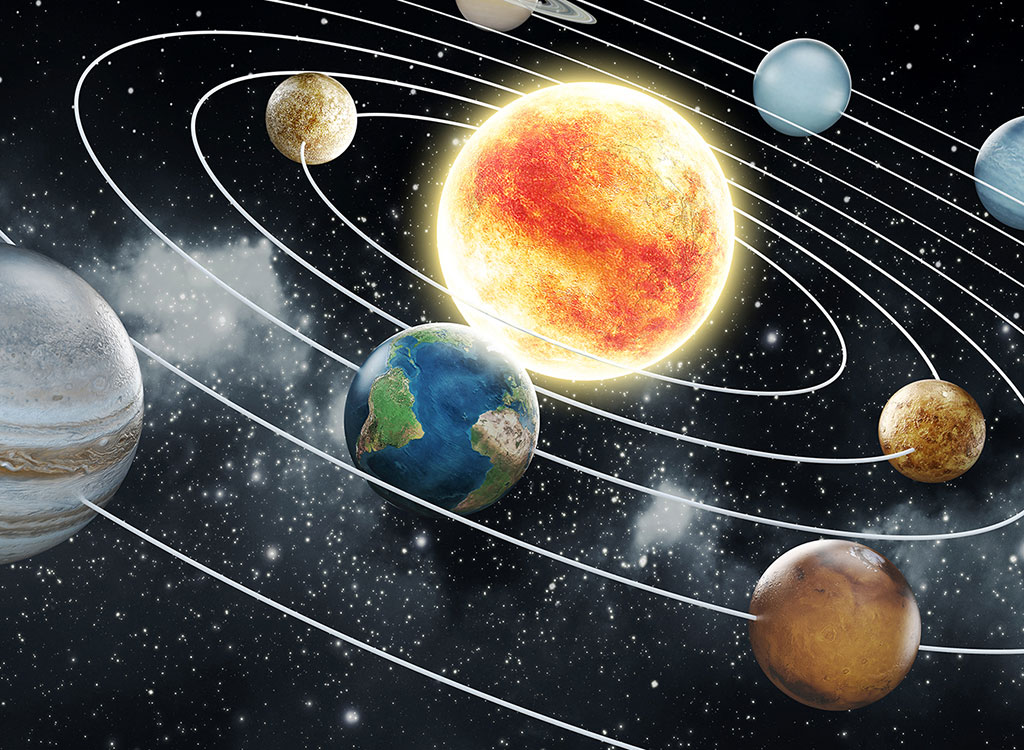
The Sun at the Center of It All
The activity begins with what students recognize: the Sun. Learners are reminded that the Sun is more than just a bright object in the sky—it is the source of energy that powers life on Earth and the gravitational anchor that holds our entire solar system together. From here, students explore the planets and other objects that orbit the Sun, setting the foundation for understanding space as a system, not a collection of isolated parts.
This framing helps students see relationships: how gravity shapes motion, how distance affects orbit, and why the Sun’s role is essential to the structure of our solar system.

Formed by Gravity
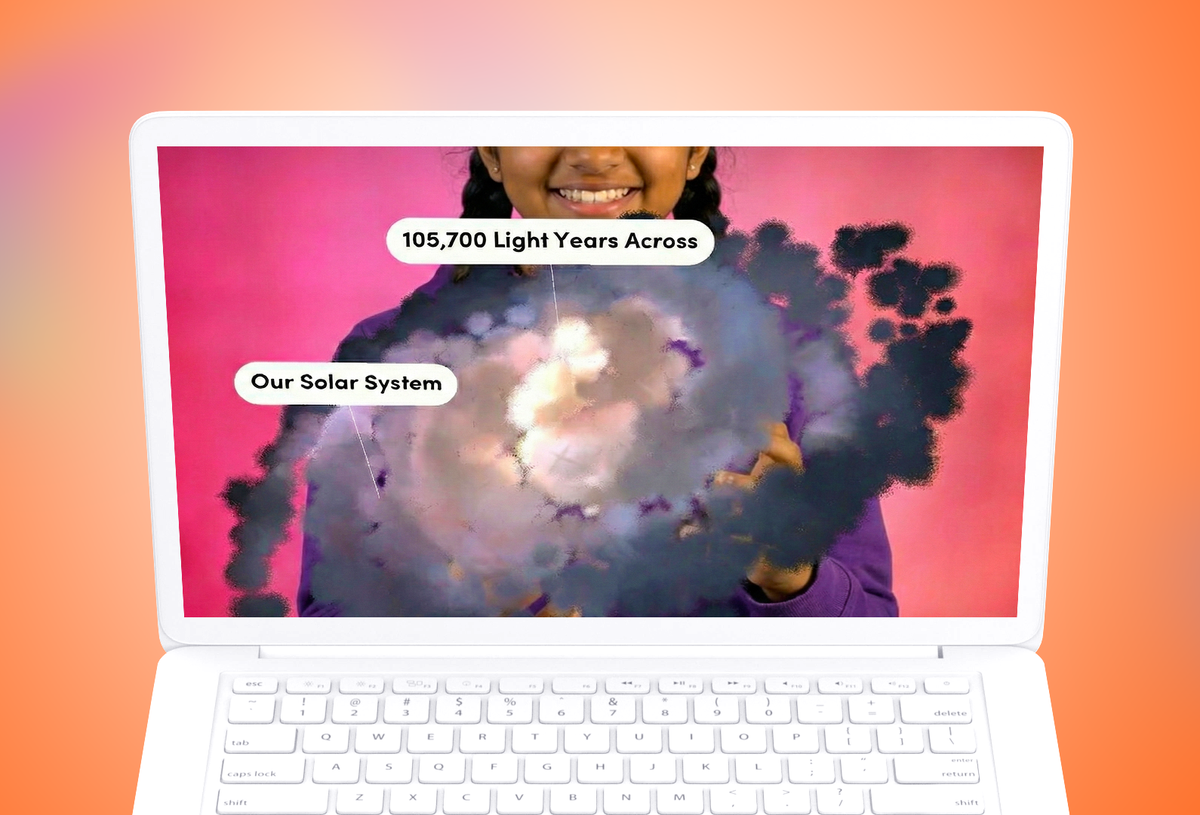
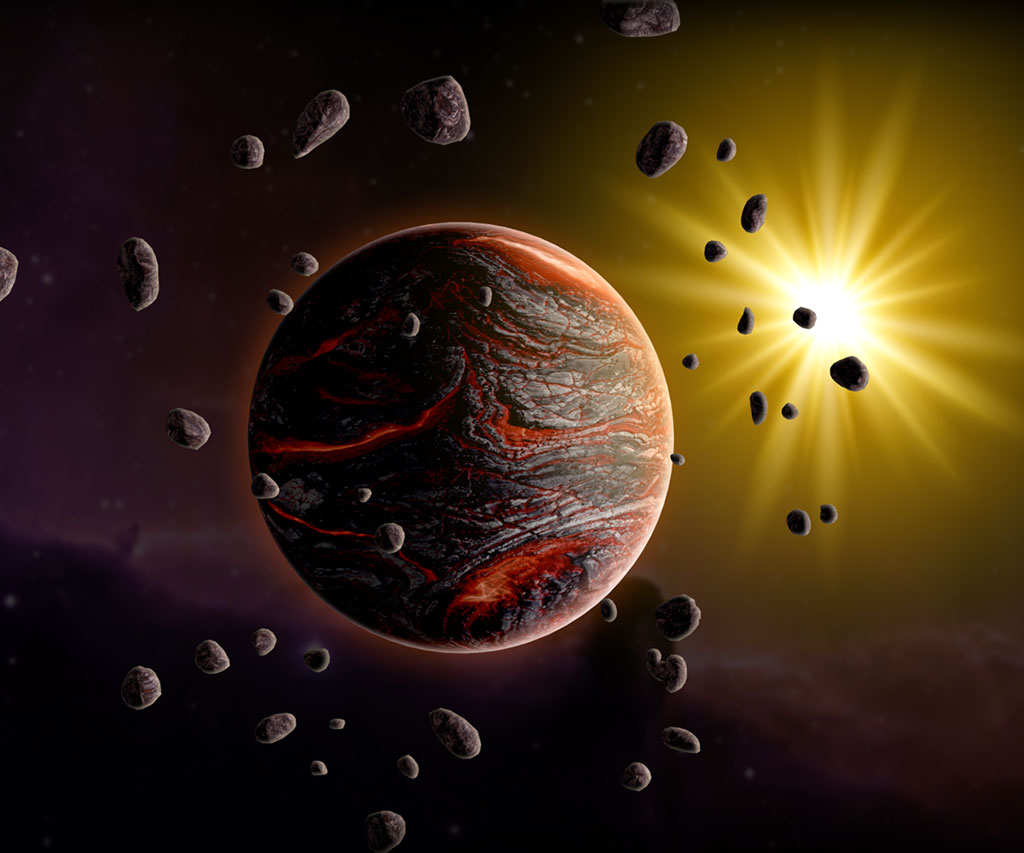
One of the most powerful moments in this activity comes when students travel back billions of years. In this visualization, the solar system begins as a massive cloud of dust and gas, loosely held together by gravity. As students watch, gravity slowly pulls matter inward, forming the Sun and, eventually, the planets.
What makes this experience especially impactful is time control. Students can fast-forward to see millions of years pass in seconds or rewind to revisit key moments in planetary formation. This ability to scrub through time helps learners grasp just how long these processes take—and how gradual changes can lead to massive results.
Teachers can prompt students to observe closely: Which planets formed first? Which took the longest to take shape? These questions encourage evidence-based reasoning and deeper thinking about planetary science.

Our Cosmic Neighborhood
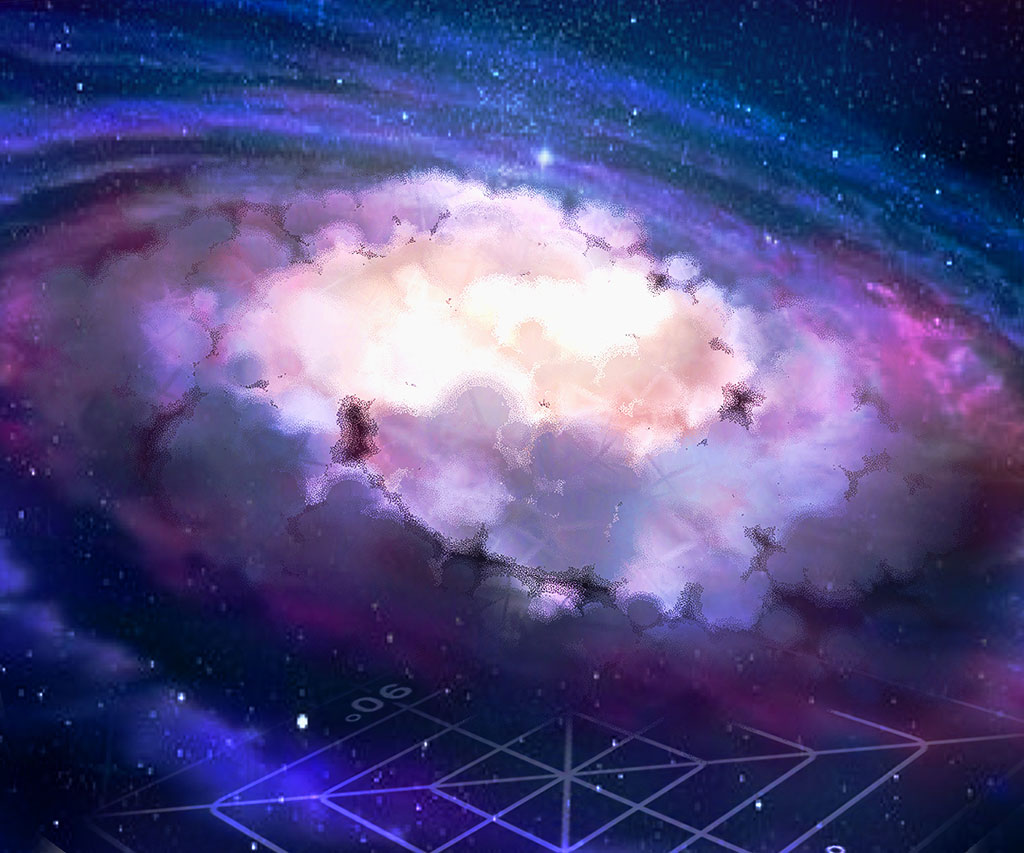
Once students understand how our solar system formed, Merge Explorer invites them to zoom out even further. With a tap, learners move from our solar system into the Local Group, revealing that our Sun and planets are just a tiny part of something much larger.
This comparison is immediately relatable. Just as a home exists on a street, within a city, within a region, our solar system exists within the Milky Way, which itself is part of a group of nearby galaxies. Students can explore some of the Milky Way’s closest neighbors, gaining a clearer sense of scale and structure in the universe.
This shift in perspective is often a “wow” moment—helping students understand that space is organized into systems within systems, each connected by gravity and motion.

Making the Vast Understandable
The Beyond Our Solar System activity transforms space science from something impossibly large into something students can meaningfully explore. By visualizing formation over time, controlling perspectives, and holding space systems in their hands, learners develop a stronger conceptual understanding of astronomy and Earth’s place in the universe.
Merge Explorer makes it easier for students to ask big questions, think in systems, and build mental models that stick long after the lesson ends.
Ready to help students explore space beyond the textbook? Discover Beyond Our Solar System and hundreds of hands-on science simulations with Merge Explorer and the Merge Cube. Try it for yourself today by signing up for a free trial at trymerge.com.